
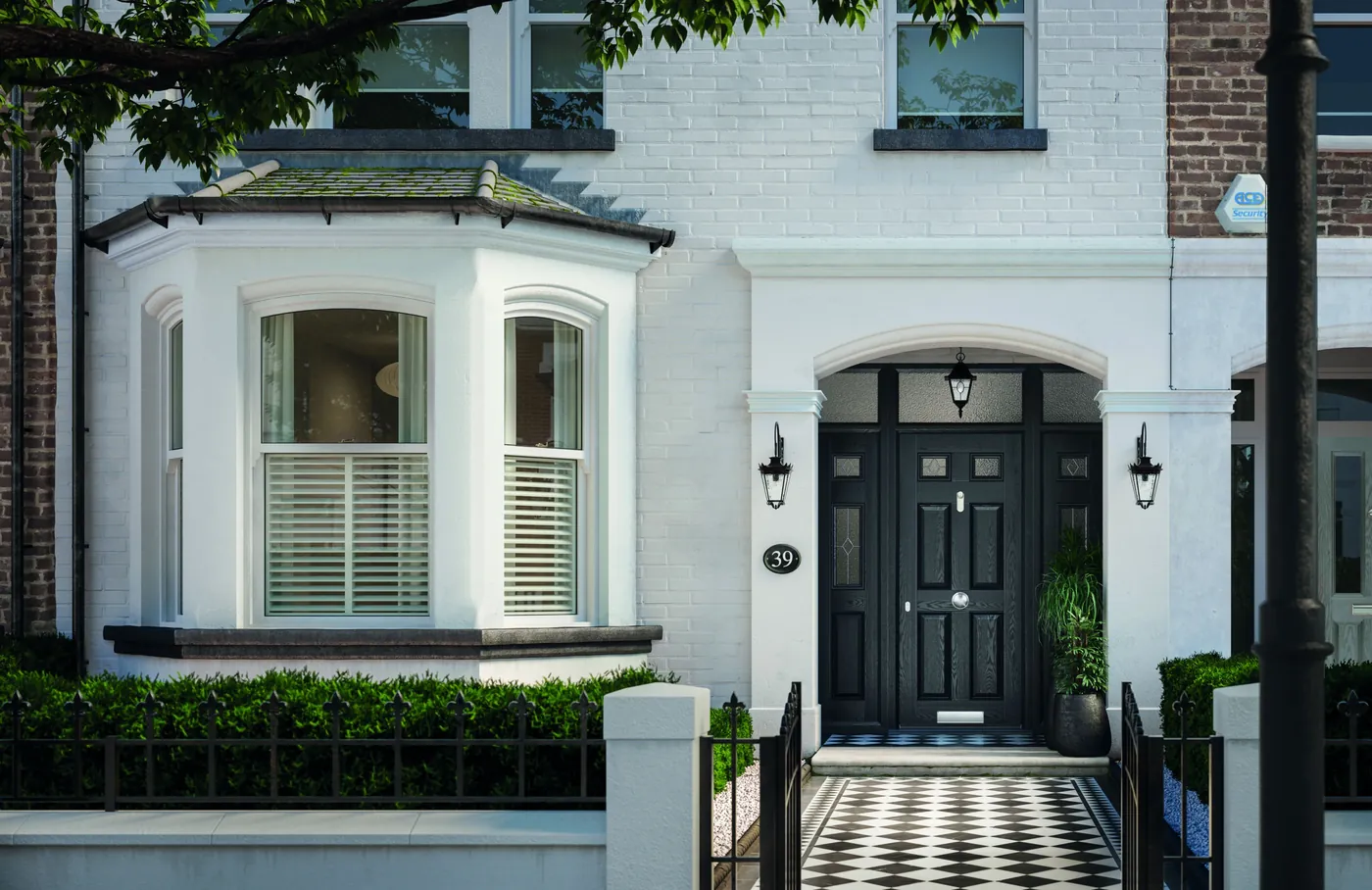
Casement windows
Casement windows: styles, prices and options
Hinged at the side or top and opening outwards, the casement is the UK's most popular window and suits almost every home.
Last updated: · By the Orangeries & Conservatories team
A casement window has one or more sashes hinged at the side or top that open outwards, usually with a fixed pane alongside. It is the UK's most common and most affordable window style, and a fitted uPVC casement typically costs about £350 to £600.
What is a casement window?
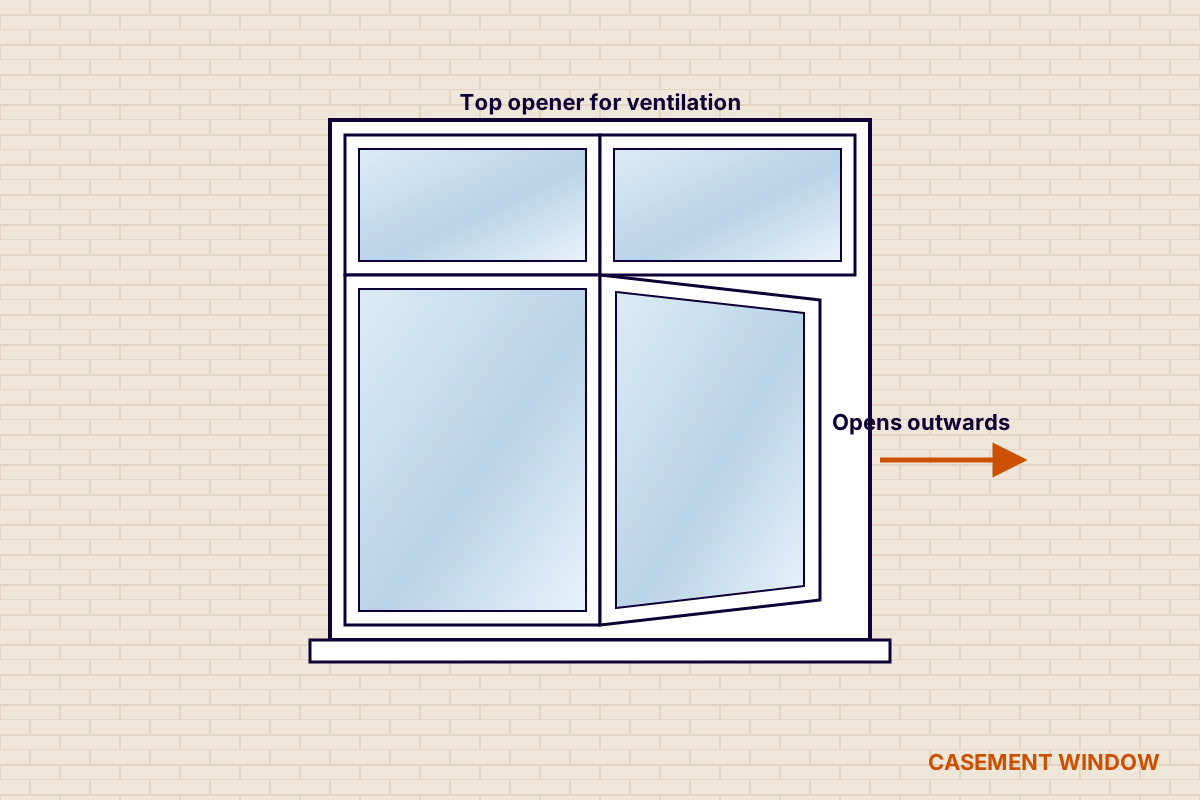
A casement window is made up of a frame with one or more opening sashes hinged at the side (side-hung) or the top (top-hung), often combined with fixed panes. The sashes open outwards on friction hinges and close against compression seals, which makes casements weathertight and energy efficient.
Because the layout of fixed and opening panes can be arranged almost any way, casements suit everything from 1930s semis to new builds. Storm-proof casements have sashes that overlap the frame; flush casements sit level with it for a more traditional look.
Key features
- Side-hung or top-hung sashes that open outwards.
- Compression seals and multi-point locks for a weathertight, secure fit.
- Easy-clean hinges so the outside of the glass can be cleaned from inside.
- Optional egress hinges on upstairs windows for a fire escape route.
- Available in uPVC, aluminium and timber, with Georgian bars and a wide range of colours.
Is it right for you?
Best suited to
- Most house types from the 1930s onwards
- Kitchens, bedrooms and living rooms
- Homeowners who want the best value per window
- Rooms that need a fire escape window upstairs
Things to consider
- Open sashes project outwards over paths and patios
- Storm-proof profiles look chunkier than traditional windows
- Period homes may suit sash or flush casement windows better
- Upstairs cleaning relies on easy-clean hinges
Frames and options
uPVC is the most affordable and needs no painting. Aluminium gives slimmer frames and more glass, and should always be thermally broken. Timber suits period and character homes and can be repaired and repainted.
Options include Georgian bars, woodgrain and coloured foils, decorative or obscure glass, trickle vents, and upgraded security hardware tested to PAS 24.
Types of casement window
Side-hung casements open like a door and give the largest clear opening, so they are used for fire escape windows upstairs. Top-hung casements open from the bottom edge and can be left ajar in light rain, which makes them popular for ventilation in kitchens and bathrooms.
Storm-proof casements have sashes that overlap the frame, giving an extra line of weather protection. They are the most common and most affordable style. Flush casements have sashes that sit level with the frame for a traditional timber look.
Cottage casements add horizontal or Georgian bars to recreate small-paned windows. Fully reversible windows pivot right round so both sides of the glass can be cleaned from inside, which is useful on upper floors. French casements are a pair of side-hung sashes that meet in the middle with no central post.
Sizes and layouts
Every casement is made to measure. A typical window combines fixed panes, which let in the most light, with one or more opening sashes, which provide ventilation and escape.
| Layout | Typical use |
|---|---|
| Single sash | Small bathroom, landing or cloakroom windows |
| Two panes: one opening, one fixed | Bedrooms and kitchens, the most common layout |
| Three panes: two openers either side of a fixed centre | Living rooms and wide openings |
| With top lights | Small top-hung openers above the main panes for trickle-free ventilation |
Upstairs, at least one window in each habitable room should have a clear opening of at least 0.33 m², at least 450 mm high and wide, with the bottom of the opening no more than 1,100 mm above the floor, so it can be used to escape in a fire.
Security, safety and ventilation
- Locks: multi-point espagnolette locks with shoot bolts and key-locking handles. Look for windows tested to PAS 24 or approved under Secured by Design.
- Child safety: restrictors limit the opening to about 100 mm, and can be released by an adult for cleaning or escape.
- Fire escape hinges: also called egress hinges, they let an upstairs sash open fully to 90 degrees.
- Safety glass: toughened or laminated glass is required in low-level panes and next to doors.
- Ventilation: trickle vents in the frame give background ventilation with the window closed, helping to prevent condensation.
- Energy: in England, replacement windows need a U-value of 1.4 W/m²K or better, or a Window Energy Rating of B or above. Most new double-glazed casements reach A.
Casement window prices
Casements are the most affordable window style. The frame material makes the biggest difference to the price.
| Frame | Typical price per window, fitted | Notes |
|---|---|---|
| uPVC | £350 – £600 | The UK's most popular choice |
| Aluminium | £400 – £1,000 | Slimmer frames, thermally broken profiles |
| Timber | £600 – £1,200 | Best for period and character homes |
| Whole house (semi-detached, 11 to 15 windows) | About £5,865 – £10,070 | Federation of Master Builders, uPVC |
Standard-sized double-glazed casements, supplied and fitted. Prices are current indicative UK ranges from the published guides listed below. Always get a written quote.
Rules and regulations
- England and Wales: replacement windows must meet building regulations for energy, safety glass, ventilation and fire escape. In England that means a U-value of 1.4 W/m²K or a Window Energy Rating of band B or better. A FENSA or Certass installer can self-certify the work and give you a certificate.
- Scotland: replacing windows in a house of one or two storeys does not normally need a building warrant, but the windows must still meet the building standards. Flats and taller buildings may need one.
- Northern Ireland: replacement windows are controlled under the Building Regulations (Northern Ireland). Check with your council's building control service.
- Listed buildings and conservation areas: changing window style or material may need consent. Ask your council before ordering.
See the full guide to the rules for new windows and doors across the UK.
Found the right style?
Tell us what you are looking for and we will recommend the right design, frame and glass for your home. Our survey and quote are free, with no obligation.
Related guides
Common questions
What is a casement window?
A casement window has one or more sashes hinged at the side or top that open outwards, often with fixed panes alongside. It is the most common window style in the UK.
How much does a casement window cost?
A fitted uPVC casement window typically costs about £350 to £600. Aluminium costs roughly £400 to £1,000 and timber about £600 to £1,200.
What is the difference between a casement and a flush casement window?
On a standard casement the opening sash overlaps the frame. On a flush casement the sash sits level with the frame, which gives a neater, more traditional look.
What is the difference between side-hung and top-hung casement windows?
A side-hung sash is hinged at the side and opens like a door, giving a large opening for escape and cleaning. A top-hung sash is hinged at the top and opens from the bottom, so it can be left open in light rain for ventilation.
Can I clean casement windows from inside?
Yes, if they have easy-clean hinges, which slide the sash across as it opens so you can reach the outside of the glass. Fully reversible windows turn right round for even easier cleaning upstairs.
Do upstairs casement windows need fire escape hinges?
At least one window in each upstairs habitable room should open wide enough to escape through. Fire escape or egress hinges let the sash open to 90 degrees to give that clear opening.
How long do casement windows last?
Good uPVC and aluminium casements usually last 20 to 30 years or more, and well-maintained timber casements can last much longer. Hinges and locks can be replaced if they wear.
Are casement windows secure?
Modern casements have multi-point locking, shoot bolts and locking handles. Look for windows tested to PAS 24 or approved under Secured by Design.
If we have not answered your question here, please feel free to view our full FAQs or contact us directly.
Ready to plan your new room?
Get a ballpark price in under a minute with our estimator, or send us your project details for a free quote.