
Steel-look doors
Steel-look doors and screens
The industrial, art deco look of slim black steel frames, made in modern thermally efficient aluminium for patios, extensions and interiors.
Last updated: · By the Orangeries & Conservatories team
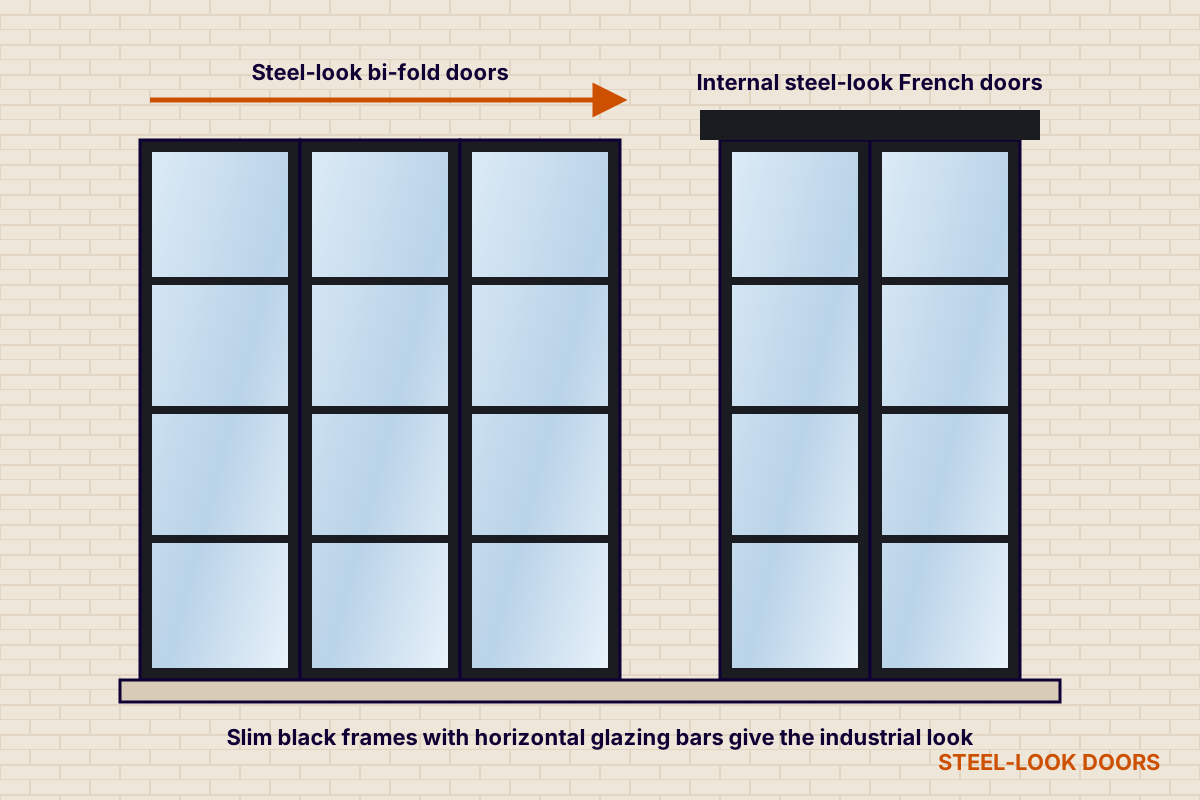
Steel-look doors recreate the slim black frames and horizontal glazing bars of traditional steel windows using powder-coated aluminium. They are available as bi-fold, French and sliding doors, and as internal doors and glazed screens. A three-panel steel-look bi-fold costs about £4,300 to £7,800 fitted.
What are steel-look doors?
Traditional steel windows and doors, often called Crittall-style, have very slim frames divided by horizontal bars. They suit art deco and industrial interiors and have become a popular choice for kitchen extensions and orangeries.
Steel-look products achieve the same appearance with aluminium. Frames are powder coated, usually in black or anthracite grey, and glazing bars are fitted to or within the glass. Aluminium is lighter, better insulated and considerably cheaper than genuine steel, although genuine steel may still be required on some listed buildings.
Key features
- Slim black or grey powder-coated aluminium frames.
- Horizontal glazing bars for the classic industrial pattern.
- Available as bi-fold, French, sliding and single doors.
- Internal doors and screens to divide open-plan spaces without losing light.
- Matching steel-look windows.
Is it right for you?
Best suited to
- Kitchen extensions and orangeries
- Open-plan homes that need zones without losing light
- Industrial, art deco and contemporary interiors
- Replacing original metal windows on 1930s homes
Things to consider
- Glazing bars reduce the view compared with plain glass
- Costs more than standard aluminium doors
- Genuine steel may be required on listed buildings
- Internal screens need careful measuring and level floors
External and internal options
External doors: steel-look bi-folds open the whole wall; French doors suit narrower openings; sliding doors give the widest panes of glass. Three or five-panel bi-folds include a traffic door for everyday use.
Internal doors and screens: single or double doors, often with matching side screens or top lights, divide a kitchen from a living room or an orangery from the house while letting light through. Handles and hinges come in black, brass, bronze and other finishes.
Real steel or steel-look aluminium?
Both give slim frames and the classic glazing bar pattern. The right choice depends on the building, the budget and how close you need to be to the original.
| Genuine steel | Steel-look aluminium | |
|---|---|---|
| Frame | Hot-rolled or cold-formed steel, the slimmest sightlines | Powder-coated aluminium, slightly deeper frames |
| Glazing bars | True glazing bars dividing separate panes | Bars fixed to or within larger sealed units |
| Insulation | Needs a thermally broken profile for exterior use | Thermally broken as standard on most systems |
| Weight | Heavy, needs strong fixings | Lighter and easier to operate |
| Cost | Considerably higher | Lower, and quicker to make |
| Best for | Listed buildings, restoration and premium projects | Most homes, extensions and orangeries |
Crittall is a British brand name that has become shorthand for any slim black steel-framed glazing. "Crittall-style" simply means doors and windows made in that heritage look.
Styles and configurations
- Single and double (French) doors: for gardens, kitchens and between rooms.
- Bi-fold and sliding doors: to open a whole wall to the garden.
- Pivot doors: a single large panel that turns on a central or offset pivot, a striking choice between rooms or as an entrance.
- Arched doors: with a genuinely curved frame or an arched glazing pattern, for period homes and interiors.
- Internal glazed screens and partitions: fixed panels, often with a door, to zone open-plan spaces or create a glazed home office.
- Matching windows: so the doors and windows of an extension share the same lines.
Colours, glass and hardware
Colours: black is by far the most popular, but frames can be powder coated in almost any RAL colour, including anthracite grey, bronze, white and deep green. Hardware comes in black, brass, chrome and stainless steel.
Glass: exterior doors use insulated double or triple glazing with toughened or laminated safety glass. Inside, popular choices include clear, frosted, reeded or fluted glass for privacy with light, and tinted glass.
Fire doors: where a door must resist fire, for example between a kitchen and hallway in a three-storey home or a loft conversion, glazed steel-look doors are available certified to FD30 (30 minutes) or FD60. Check what your building regulations require before you choose.
Measuring and fitting
Openings are rarely perfectly square, so your installer will measure the width at the top, middle and bottom, the height on the left, middle and right, and both diagonals. Doors are then made to measure.
Made-to-measure steel-look doors usually take a few weeks to manufacture, and genuine steel often takes longer. On a renovation, internal doors and screens are fitted last, after floors are laid and walls plastered and painted, to protect the powder-coated finish and make sure the frame fits the finished opening.
Steel-look door prices
Typical supplied and fitted prices for aluminium steel-look products in black or grey.
| Product | Typical price, fitted | Notes |
|---|---|---|
| Steel-look window | £860 – £3,965 | Depends on size and openers |
| Three-panel steel-look bi-fold | £4,300 – £7,810 | The most popular door |
| Two-panel steel-look sliding door | £7,500 – £9,150 | Large panes |
| Internal steel-look door or screen | From about £980 | Single doors start here |
Prices are for aluminium. Genuine steel costs considerably more. Prices are current indicative UK ranges from the published guides listed below. Always get a written quote.
Rules and regulations
- Energy and safety: replacement external doors must meet building rules for heat loss, and glazed areas in and beside doors must use toughened or laminated safety glass.
- Certification: in England and Wales a FENSA or Certass registered installer can self-certify the work. In Scotland and Northern Ireland, check with your council's building standards or building control team.
- Security: look for doors tested to PAS 24 or approved under Secured by Design, with multi-point locks and anti-snap cylinders.
- Widening an opening: making an opening bigger for patio or bi-fold doors needs a new lintel or steel beam, and building regulations approval or a building warrant.
See the full guide to the rules for new windows and doors across the UK.
Found the right style?
Tell us what you are looking for and we will recommend the right design, frame and glass for your home. Our survey and quote are free, with no obligation.
Common questions
Are steel-look doors real steel?
No. Most are powder-coated aluminium designed to look like steel. Genuine steel doors are a separate, more expensive product.
How much do steel-look bi-fold doors cost?
A three-panel steel-look bi-fold typically costs about £4,300 to £7,800 fitted.
Can steel-look doors be used inside?
Yes. Internal steel-look doors and glazed screens are popular for dividing open-plan kitchens and living spaces without blocking light.
What is the difference between Crittall and steel-look doors?
Crittall is a British manufacturer whose name is often used for any slim black steel-framed glazing. Steel-look doors copy that heritage style, usually in aluminium, while Crittall-style steel doors are made in genuine steel.
Do steel-look doors have to be black?
No. Black is the most popular finish, but frames can be powder coated in almost any colour, including grey, bronze, white and green, with hardware in black, brass or chrome.
What glass can I have in internal steel-look doors?
Clear glass keeps the room open, while frosted, reeded or fluted glass gives privacy and still lets light through. All glass in doors must be toughened or laminated safety glass.
Can I get fire-rated steel-look doors?
Yes. Glazed doors certified to FD30 or FD60 are available where building regulations require a fire door, for example on a protected stairway in a three-storey home.
When should internal steel-look doors be fitted?
At the end of a renovation, after the floors are laid and the walls are plastered and painted. This protects the finish and makes sure the doors fit the finished opening.
Are aluminium steel-look doors suitable for listed buildings?
Not always. Listed buildings may require genuine steel or timber, so check with your conservation officer first.
If we have not answered your question here, please feel free to view our full FAQs or contact us directly.
Ready to plan your new room?
Get a ballpark price in under a minute with our estimator, or send us your project details for a free quote.