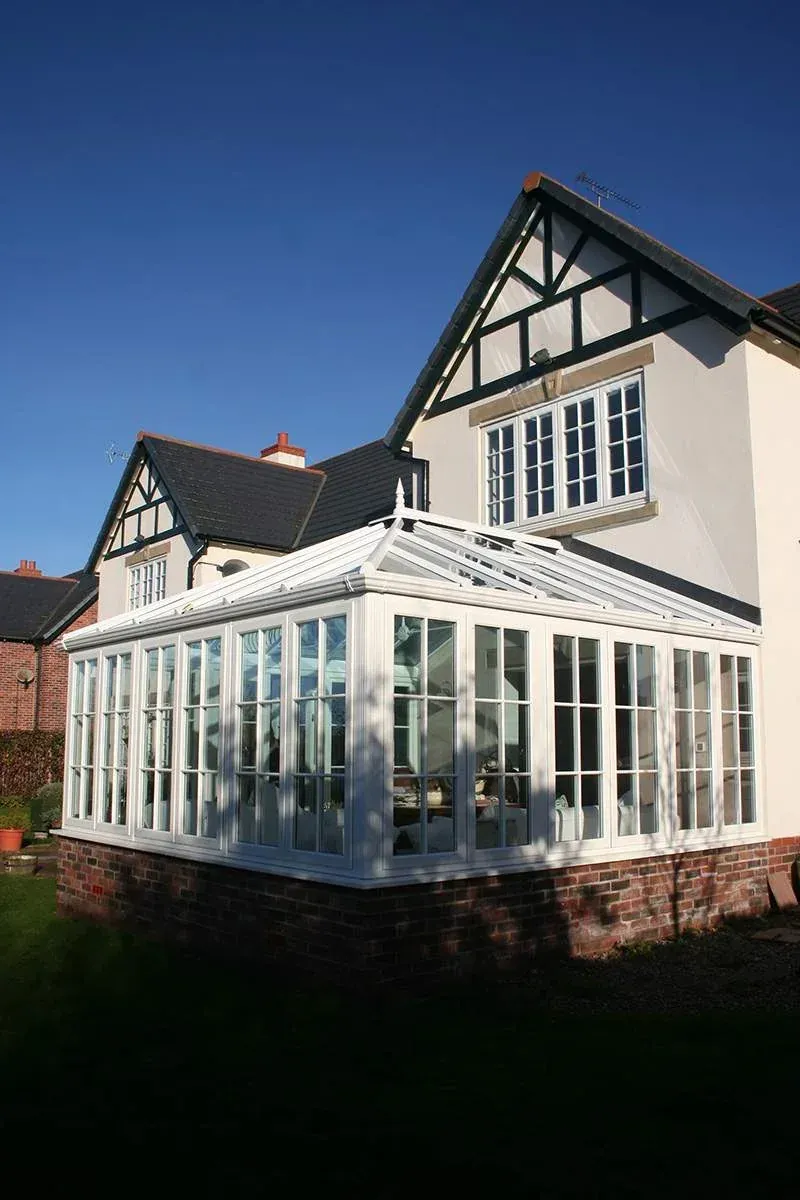
Conservatory
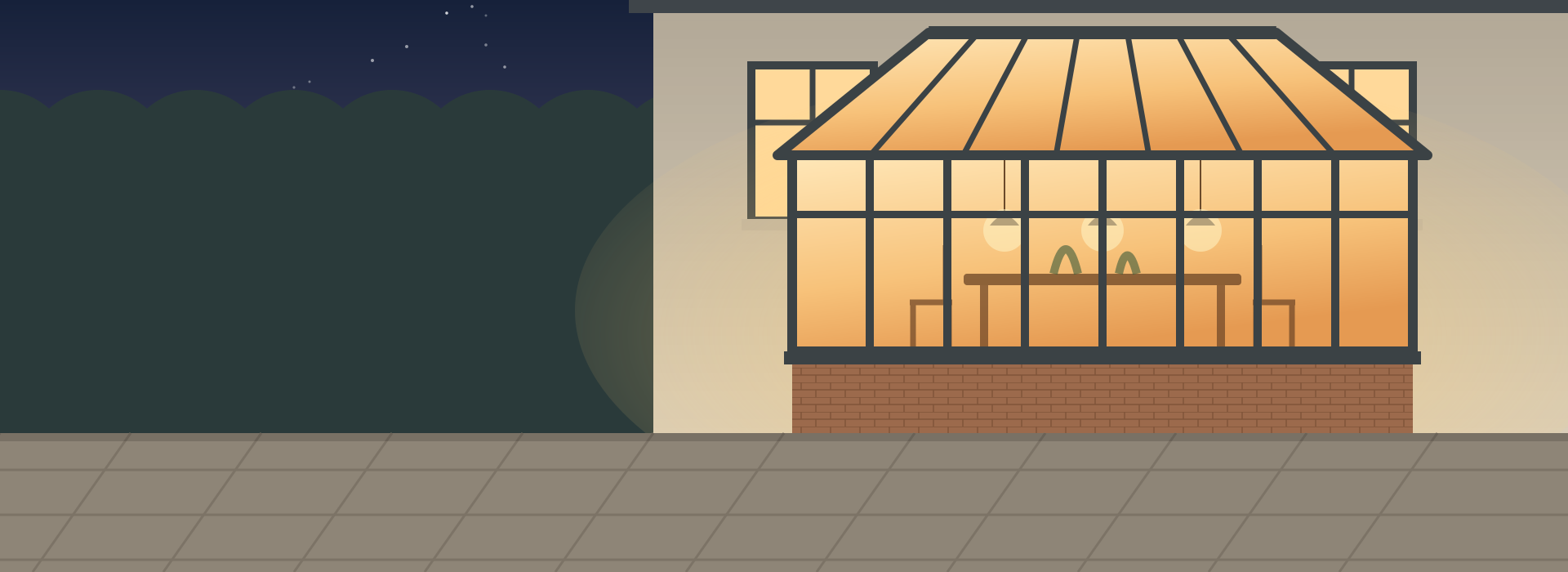
Mostly glass walls on a low brick base, with a glazed or tiled roof. Light, open and the more affordable choice. See our conservatory styles.

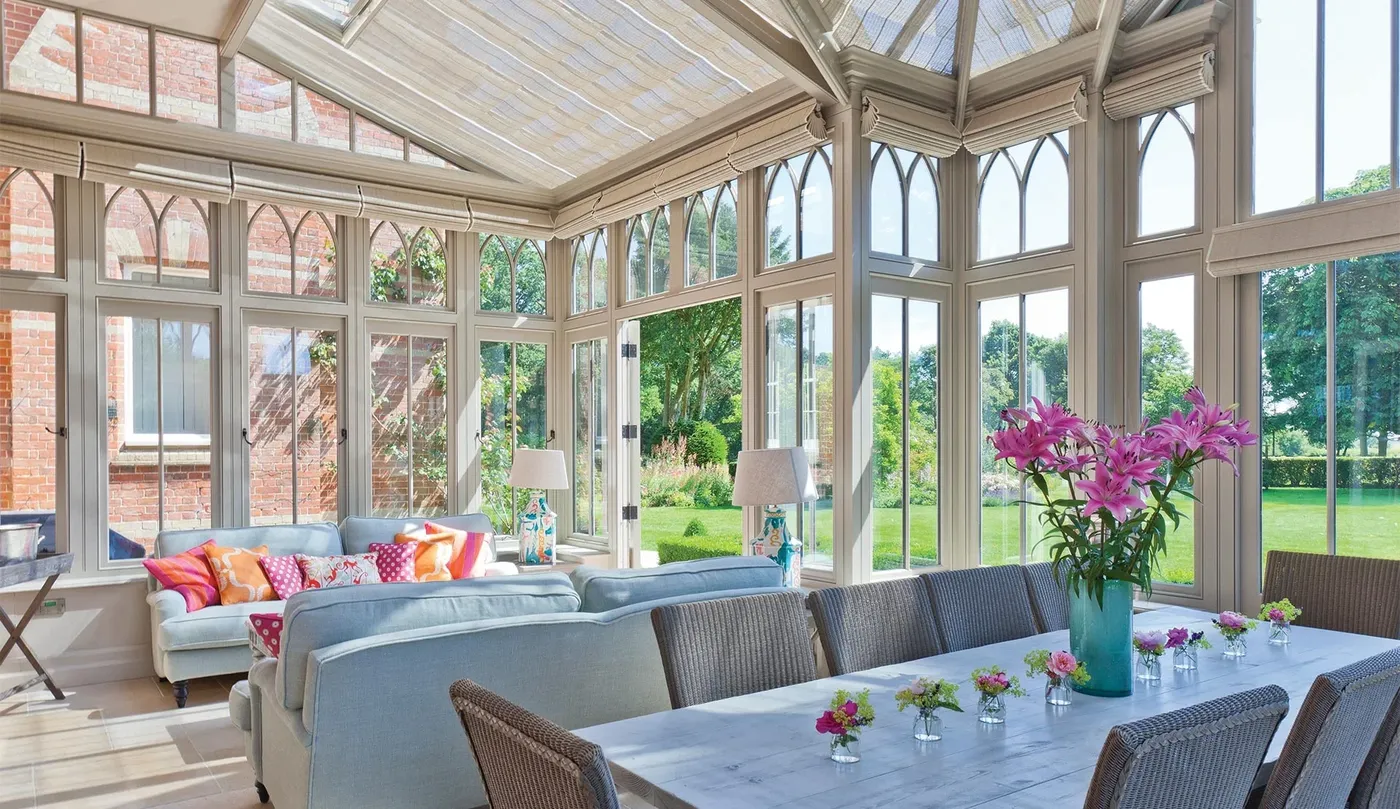
Both bring light and garden views into your home. Here's how they differ on light, comfort, cost, build time and permissions, so you can choose the right one.
View styles and designs Get a free quote
Last updated: · By the Orangeries & Conservatories team
The difference between a conservatory and an orangery is the amount of glass. A conservatory is mostly glass and costs about £6,500 to £45,000 fitted. An orangery has more solid wall and a roof lantern, costs about £20,000 to £55,000, and is warmer, more private and feels like part of the house. Planning rules are the same for both.
Mostly glass walls on a low brick base, with a glazed or tiled roof. Light, open and the more affordable choice. See our conservatory styles.
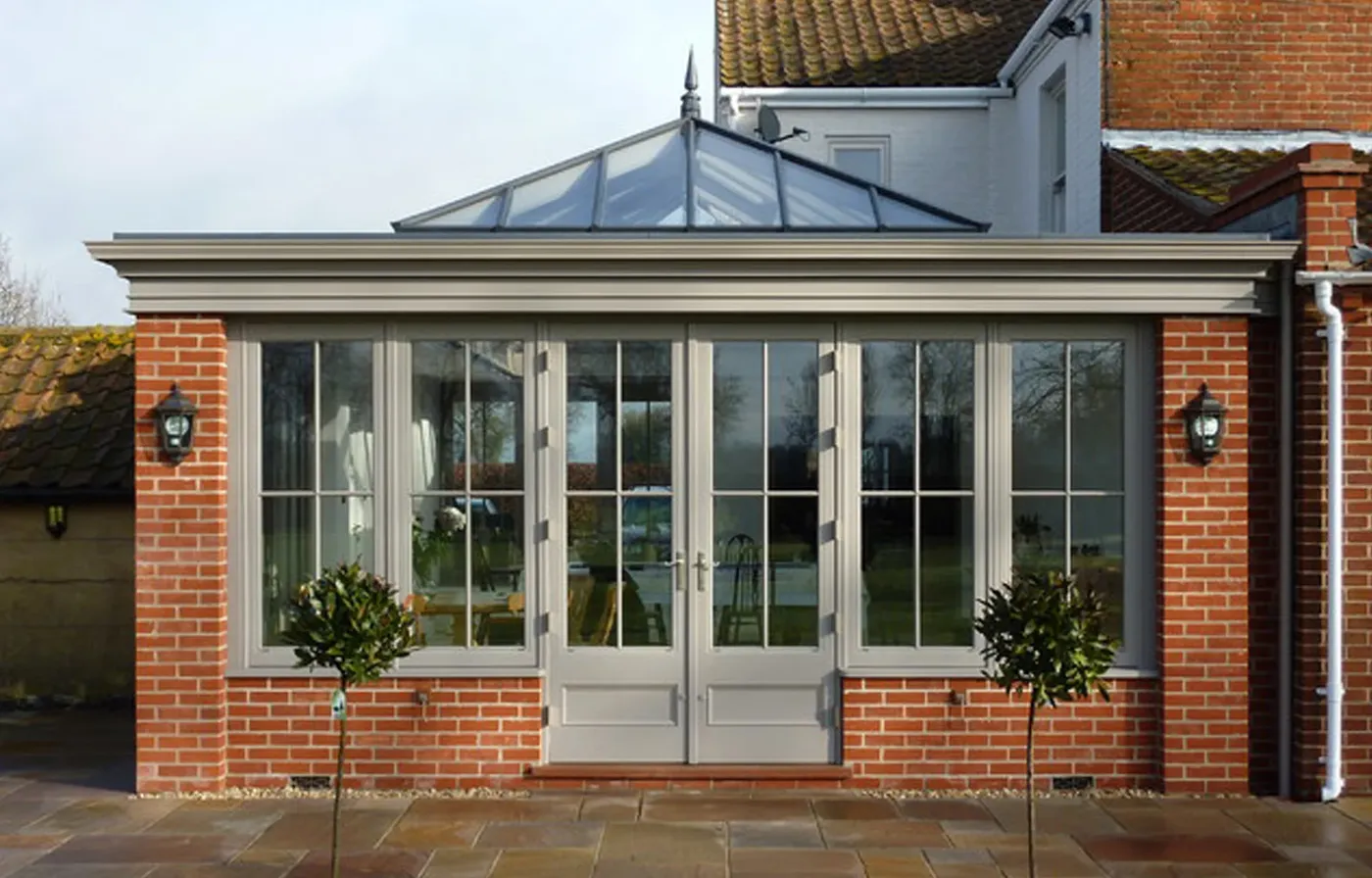
More solid wall, with brick or rendered piers, tall windows and a flat insulated roof around a glazed lantern. Feels like part of the house. See our orangery guide.
The real difference is how much of the room is glass. That one choice affects light, comfort, privacy, cost and the approvals you need.
| Conservatory | Orangery | |
|---|---|---|
| Walls | Mostly glass on a low brick or stone dwarf wall | More solid wall: brick, stone or rendered piers between tall windows |
| Roof | Fully glazed, or an insulated tiled roof as an upgrade | Flat insulated roof with a plastered ceiling around a glazed roof lantern |
| Light | Maximum, with sky views from every angle | Bright, focused through the central lantern |
| Comfort | Can overheat or chill without good glass, blinds and heating | Easier to keep at a steady temperature all year |
| Privacy | Lower, with glass on all sides | Higher, as piers and walls screen views |
| Look | A distinctly glazed addition | Reads as part of the original house |
| Typical cost today | About £6,500 to £45,000 fitted | About £20,000 to £55,000, more for large bespoke designs |
| Build time | About 1 to 6 weeks | About 6 to 10 weeks |
| Planning permission | Usually permitted development | The same rules: planning makes no legal distinction |
| Building regulations | Often exempt if under 30 m² and separated from the house by external doors | Usually needs approval because of the solid roof and walls |
| Best for | Sun rooms, garden rooms and lighter budgets | Kitchen-diners, family rooms and open-plan living |
Cost and time ranges are current indicative UK figures; see the cost guide for detail and our cost estimator for a ballpark figure.
How to tell them apart: the industry rule of thumb is that a room with roughly 75% or more of its roof glazed and half or more of its walls glazed is a conservatory. Below that, with a solid perimeter roof and piers, it is usually called an orangery. This is a trade convention rather than a legal definition: for building regulations, what matters is how the room is built and whether it is separated from the house.
Inside a conservatory, light comes from every direction, including the roof, so the room feels open and part of the garden. It is wonderful on a bright morning, but without solar-control glass and blinds it can be glary at midday.
Inside an orangery, a flat plastered ceiling runs around the edge of the room, often called a pelmet or perimeter ceiling. It holds downlights, speakers and curtain tracks, and frames the glazed roof lantern in the middle. Piers outside are often matched by columns inside, which give natural places for wall lights and furniture. The result is a room with daylight from above but a more familiar, finished feel.
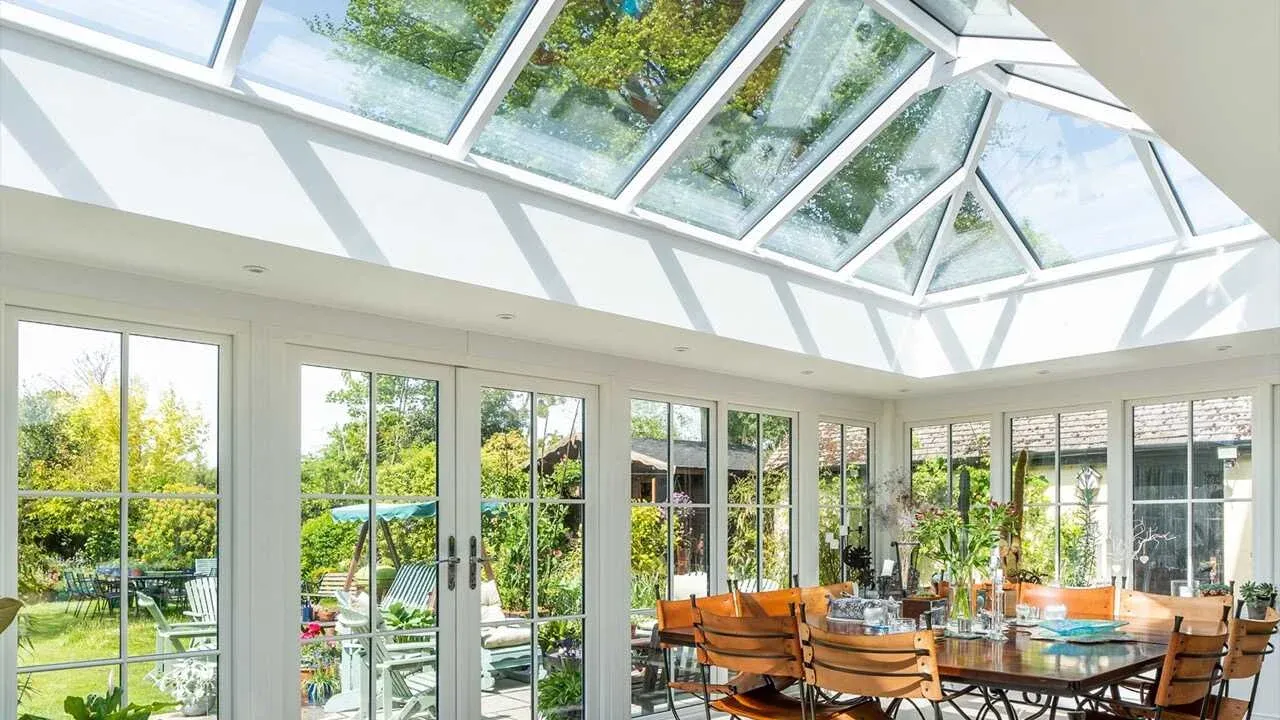
The name on the brochure matters less than how the room is built. These are the questions that make the real difference.
Usually, because more of the roof is solid and insulated, so less heat escapes. But no room is warm just because of its name. Comfort depends on the roof and floor insulation, the lantern and glazing specification, how airtight the build is and how it is heated. A modern conservatory with good glass, or an insulated tiled roof, can be comfortable all year too.
This is the decision that most affects cost. A conservatory is normally exempt from building regulations only if it is under 30 m², at ground level, separated from the house by external-quality doors or walls, and has its own heating controls. Remove those doors to make it open-plan and it is usually treated as part of the house, so it needs approval and a higher specification. Decide this before you compare quotes.
Yes. Both need a properly designed base. An orangery with brick piers or large openings may need deeper or different foundations from a lightweight conservatory, depending on the soil, nearby trees, drains and neighbouring buildings. Never assume a new room can simply sit on an old patio or conservatory base without a survey.
Planning permission and building regulations are separate. A room that does not need a planning application may still need building regulations approval. See our planning guide and the Planning Portal's conservatory guidance.
Pros
Cons
Solar-control glass, blinds or an insulated tiled roof make a big difference to comfort.
Pros
Cons
A large roof lantern and tall glazing keep an orangery bright.
For the same floor area, an orangery usually costs more because of the extra brickwork, the insulated roof and the lantern.
| Size | Floor area | Conservatory, fitted | Orangery, fitted |
|---|---|---|---|
| 3 m × 3 m | 9 m² | £8,000 – £14,000 | £18,000 – £25,000 |
| 4 m × 3 m | 12 m² | £11,000 – £18,000 | £20,000 – £30,000 |
| 4 m × 4 m | 16 m² | £16,000 – £28,000 | £28,000 – £38,000 |
| 5 m × 4 m | 20 m² | £18,000 – £30,000 | £32,000 – £45,000 |
Indicative ranges for uPVC or aluminium, based on the figures in our cost guide. Timber, bespoke designs, difficult access and London prices cost more.
Something in between: if you like the light of a conservatory but want orangery comfort, consider a conservatory with an insulated tiled roof, a modern conservatory with a flat roof and lantern, or a lean-to orangery.
If you are weighing up a traditional brick extension too, this is how the three compare.
| Conservatory | Orangery | Single-storey extension | |
|---|---|---|---|
| Glass | Mostly glass | Large windows and a roof lantern | Ordinary windows, rooflights optional |
| Light | The most | Plenty, from above | The least |
| Feel | A garden room | A bright room that is part of the house | Indistinguishable from the house |
| Rooms | One room | Usually one large room | Can be several rooms |
| Building regulations | Often exempt | Usually needed | Always needed |
| Relative cost | Lowest | Middle | Often the highest |
A premium bespoke orangery can cost as much as a simple brick extension, so compare like for like.
Comparing quotes: check that every price includes the same things: foundations and drainage, the glazing specification, electrics, heating, plastering, flooring, building regulations fees and VAT. Two headline prices can hide very different specifications.
Not sure? Our free design visit is the easiest way to decide. We look at your home, talk through how you want to use the room and show you both options. Book a design visit.
Conservatories and orangeries side by side, so you can see the difference in glass, roofs and walls. Select a photo to enlarge it.
Seen the difference? Explore every conservatory style, from Victorian and Edwardian to lean-to and modern glass-to-ground designs, or browse traditional, modern and lean-to orangeries with roof lanterns, each with current prices and a gallery of real projects.
Tell us how you want to use the room and we will help you choose between a conservatory and an orangery. Our design visit and quote are free.
The amount of glass. A conservatory has mostly glazed walls and a glazed or tiled roof on a low brick base. An orangery has more solid wall, with brick or rendered piers, tall windows and a flat insulated roof around a glazed roof lantern, so it feels more like part of the house.
Yes, usually. The extra brickwork, insulated roof and lantern mean an orangery typically costs about £20,000 to £55,000 fitted, compared with about £6,500 to £45,000 for a conservatory. For the same floor area, an orangery often costs £10,000 to £15,000 more.
An orangery is easier to keep comfortable all year because of its solid walls and insulated roof. A well-specified conservatory with solar-control glass, roof vents, blinds and its own heating can also be used most of the year, and an insulated tiled roof makes a big difference.
An orangery is generally seen as a more permanent, higher-quality extension, so it is more likely to add value, especially as a kitchen-diner or family room. A well-built conservatory in good condition still adds useful living space. Any added value depends on your home, local prices and the quality of the build.
No. For planning purposes there is no legal distinction: both are treated as single-storey extensions and many fall within permitted development. Orangeries are more likely to need building regulations approval because of their solid walls and roof.
The name goes back to the 17th and 18th centuries, when wealthy European households built tall-windowed garden buildings to keep orange and lemon trees alive through the winter. Owning one was a status symbol. Today's orangeries keep the solid walls and tall windows, but are designed as living rooms rather than plant houses.
In the UK it is usually said ORR-in-jer-ee, with the stress on the first syllable.
Broadly, yes. Sunroom is the more common term in the US. In the UK most people say conservatory for a mostly glazed room and orangery for one with a solid roof and lantern, while garden room and glass extension are used for both.
Underfloor heating is the most popular choice because it gives even warmth without using wall space. Radiators on the main heating, air-to-air heat pumps and electric heating are also used. If a conservatory is to stay exempt from building regulations, its heating must have its own controls. Reducing heat loss with good insulation and glazing matters more than the heating type.
Only if it is designed for it. A room used for sleeping must meet building regulations for habitable rooms, including fire safety, escape routes, ventilation and insulation. If you want a guest bedroom, say so at the design stage, as a differently specified orangery or a conventional extension may be needed.
Often, yes. Replacing a glass or polycarbonate roof with an insulated perimeter roof and a roof lantern, and adding insulated pelmets or piers, can give an existing conservatory an orangery feel. The base and frames need checking first, and the work usually needs building regulations approval.
If we have not answered your question here, please feel free to view our full FAQs or contact us directly.
Get a ballpark price in under a minute with our estimator, or send us your project details for a free quote.