
Glass options
Decorative & obscure glass
Glass that adds privacy, character or a work of art to your windows and doors. The main options and where each works best.
Last updated: · By the Orangeries & Conservatories team
The main glass options for windows and doors are obscure (textured patterns for privacy), frosted (a smooth, satin finish), etched (sandblasted designs), leaded and Georgian bars, stained, bevelled and fusion glass. All can be built into modern double or triple-glazed units, and glass in doors and low panes must be safety glass.
Types of decorative and obscure glass
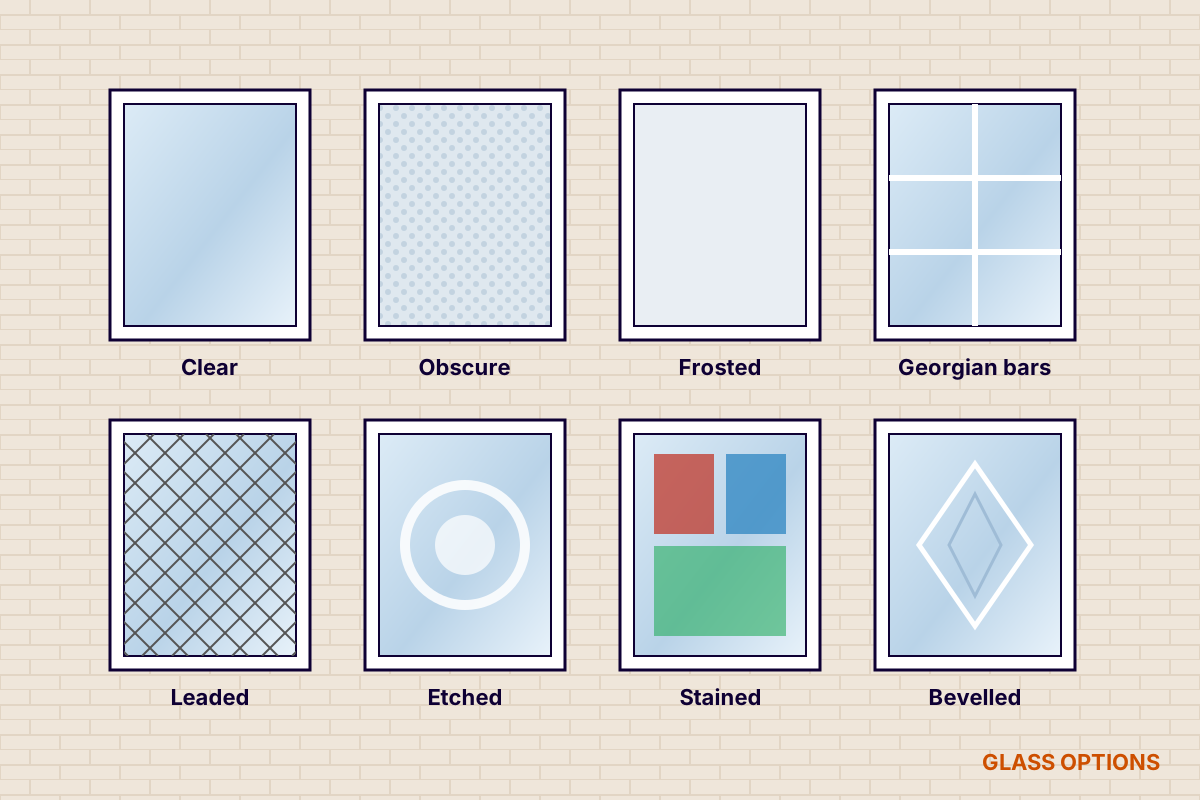
- Obscure glass: textured patterns that blur the view. Each pattern has a privacy level, usually rated 1 to 5.
- Frosted glass: a smooth, satin finish with high privacy, ideal for bathrooms.
- Etched glass: sandblasted patterns or house numbers on clear glass.
- Georgian bars: bars fitted between the panes to create a traditional grid.
- Leaded glass: lead strips in diamond, square or other patterns, for cottages and period homes.
- Stained and coloured glass: traditional or modern designs, often in door panels and fanlights.
- Bevelled glass: pieces of glass with angled edges that catch the light.
- Fusion glass: coloured glass pieces fused together in a kiln for a bold, modern panel.
Key features
- Privacy without blocking daylight.
- Character to match the age of your home.
- Built into sealed double or triple-glazed units.
- Available as toughened or laminated safety glass.
- Bespoke designs, including copies of original panels.
Is it right for you?
Best suited to
- Bathrooms, cloakrooms and landings
- Front doors and side panels
- Period homes restoring original features
- Windows facing neighbours or the street
Things to consider
- Higher privacy patterns let less view through
- Leaded and stained designs cost more than plain glass
- Glass in doors and low-level panes must be safety glass
- Ask to see samples in daylight before choosing
Privacy and safety
Choose an obscure pattern with the privacy level you need: level 5 for bathrooms facing the street, lower levels where you only need a soft blur. Frosted satin glass gives the cleanest modern look.
Building rules require safety glass in doors, side panels next to doors and low-level panes. Toughened glass breaks into small, blunt pieces; laminated glass holds together when broken and adds security. See also double glazing and secondary glazing.
Glass types compared
How the main options compare for privacy and where they suit best.
| Glass | Privacy | Best for |
|---|---|---|
| Clear | None | Living rooms, garden views |
| Obscure (patterned) | Low to high, depending on pattern | Bathrooms, front doors, side panels |
| Frosted (satin) | High | Bathrooms, modern doors |
| Etched | Partial | Front doors, house numbers, internal doors |
| Georgian or leaded | None to low | Period homes and cottages |
| Stained, bevelled or fusion | Partial | Door panels, fanlights, feature windows |
Decorative glass is usually priced as an upgrade to the standard unit; ask for it in your quote. Prices are current indicative UK ranges from the published guides listed below. Always get a written quote.
Rules and regulations
- England and Wales: replacement windows must meet building regulations for energy, safety glass, ventilation and fire escape. In England that means a U-value of 1.4 W/m²K or a Window Energy Rating of band B or better. A FENSA or Certass installer can self-certify the work and give you a certificate.
- Scotland: replacing windows in a house of one or two storeys does not normally need a building warrant, but the windows must still meet the building standards. Flats and taller buildings may need one.
- Northern Ireland: replacement windows are controlled under the Building Regulations (Northern Ireland). Check with your council's building control service.
- Listed buildings and conservation areas: changing window style or material may need consent. Ask your council before ordering.
See the full guide to the rules for new windows and doors across the UK.
Found the right style?
Tell us what you are looking for and we will recommend the right design, frame and glass for your home. Our survey and quote are free, with no obligation.
Related guides
Common questions
What is the difference between obscure and frosted glass?
Obscure glass has a textured pattern that blurs the view. Frosted glass has a smooth satin finish. Both give privacy while letting light through.
Which glass is best for a bathroom window?
A high-privacy obscure pattern or frosted satin glass, so no clear view is possible.
Can decorative glass go into double glazing?
Yes. Leaded, stained, etched and bevelled designs can all be built into sealed double or triple-glazed units.
Where is safety glass required?
In doors, panels next to doors and low-level glazing. It can be toughened or laminated, and decorative glass can be made to these standards.
If we have not answered your question here, please feel free to view our full FAQs or contact us directly.
Ready to plan your new room?
Get a ballpark price in under a minute with our estimator, or send us your project details for a free quote.