
Replacement windows
Replacement windows: styles, prices and options
Draughty, misted or hard to open? How to tell when windows need replacing, what new windows can save and what to expect on fitting day.
Last updated: · By the Orangeries & Conservatories team
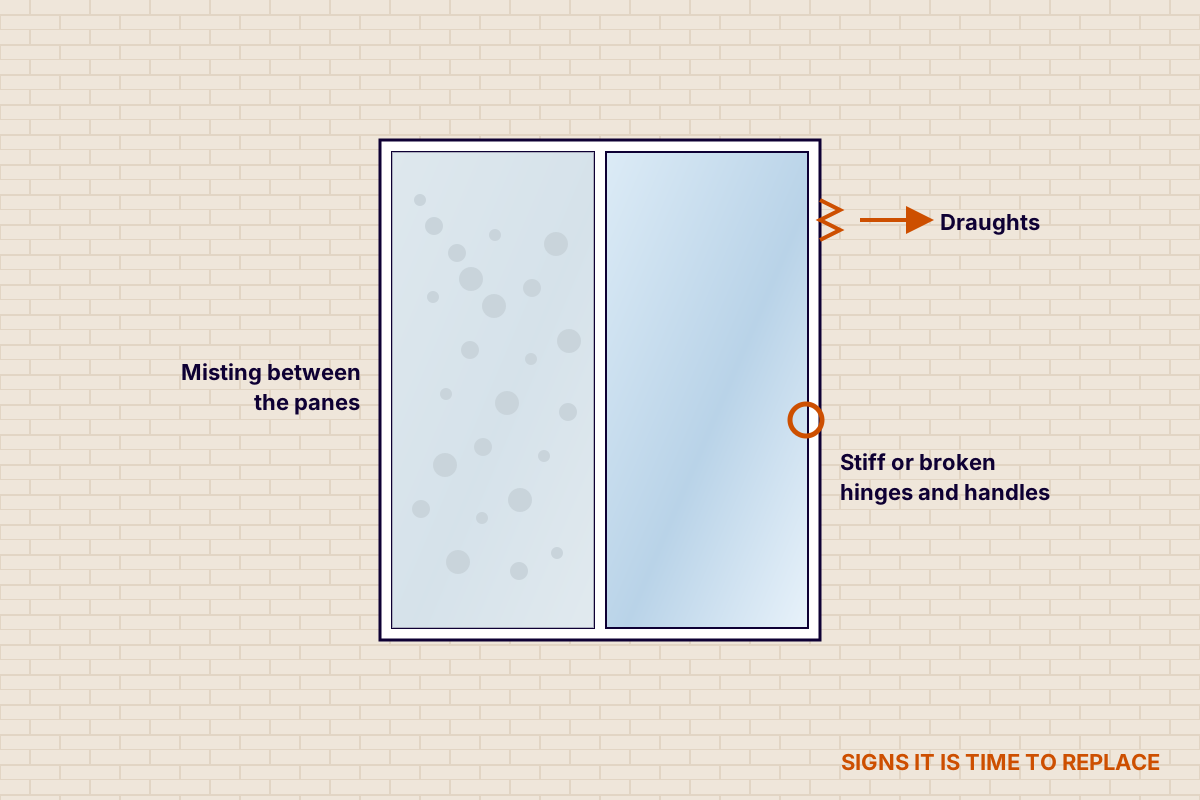
It is time for replacement windows when you see misting between the panes, feel draughts, find windows hard to open or lock, or have rotten or damaged frames. The Energy Saving Trust estimates that replacing all single glazing in a semi-detached home with A-rated double glazing saves around £85 a year in Great Britain and £140 in Northern Ireland.
Signs your windows need replacing
- Condensation between the panes: the sealed unit has failed and is no longer insulating properly.
- Draughts and cold spots: worn seals, warped frames or gaps around the window.
- Hard to open, close or lock: dropped sashes, worn hinges or broken locking mechanisms.
- Rot, cracks or damage: soft timber, cracked glass or damaged frames.
- Noise and high bills: single glazing or very old double glazing lets heat out and noise in.
Key features
- A warmer, quieter home with fewer draughts.
- Lower heating bills, especially when replacing single glazing.
- Better security with modern locks and internally beaded glass.
- Less maintenance, especially with uPVC and aluminium.
- A fresh look that can add kerb appeal.
Is it right for you?
Best suited to
- Homes with single glazing
- Double glazing that is failing or more than 20 to 25 years old
- Rotten or badly damaged timber windows
- Homes being renovated or extended
Things to consider
- Failed sealed units can often be replaced without changing the frame
- Sound original sash windows may be better renovated
- Listed buildings need consent for changes
- Replacing all windows at once usually costs less per window
Repair or replace?
Not every problem means new windows. A misted sealed unit can usually be swapped on its own, and hinges, handles and seals can be replaced. Original timber sash windows can be renovated and upgraded with draught proofing and secondary glazing.
Replacement makes more sense when frames are rotten, warped or failing in several places, or when you have single glazing throughout.
What to expect on fitting day
- Clear sills and the area around each window, and move delicate items.
- Installers protect floors and furniture, then remove one window at a time.
- New frames are fixed, sealed and glazed, and the reveals made good.
- You are shown how to use the windows and receive your certificate.
Replacement window prices
Typical fitted prices for common replacement windows.
| Window | Typical price, fitted | Notes |
|---|---|---|
| uPVC casement | £350 – £600 each | The most popular replacement |
| Aluminium casement | £400 – £1,000 each | Slim frames |
| Timber casement | £600 – £1,200 each | Period homes |
| Whole house, 3-bed | Around £3,750 | Average for a typical set of windows |
Standard-sized double-glazed windows. Prices are current indicative UK ranges from the published guides listed below. Always get a written quote.
Rules and regulations
- England and Wales: replacement windows must meet building regulations for energy, safety glass, ventilation and fire escape. In England that means a U-value of 1.4 W/m²K or a Window Energy Rating of band B or better. A FENSA or Certass installer can self-certify the work and give you a certificate.
- Scotland: replacing windows in a house of one or two storeys does not normally need a building warrant, but the windows must still meet the building standards. Flats and taller buildings may need one.
- Northern Ireland: replacement windows are controlled under the Building Regulations (Northern Ireland). Check with your council's building control service.
- Listed buildings and conservation areas: changing window style or material may need consent. Ask your council before ordering.
See the full guide to the rules for new windows and doors across the UK.
Found the right style?
Tell us what you are looking for and we will recommend the right design, frame and glass for your home. Our survey and quote are free, with no obligation.
Related guides
Common questions
How long do replacement windows last?
Good-quality uPVC and aluminium windows typically last 20 to 30 years or more. Well-maintained timber windows can last longer.
Is it worth replacing 20-year-old double glazing?
If the units are misting, frames are failing or locks are worn, yes. If they are sound, the energy saving over modern glazing is smaller.
Should I replace all my windows at once?
It usually costs less per window and gives a consistent look, but you can replace them in stages if the style is kept consistent.
How much can new windows save?
The Energy Saving Trust estimates around £85 a year in Great Britain and £140 in Northern Ireland when replacing all single glazing in a semi-detached home with A-rated double glazing.
If we have not answered your question here, please feel free to view our full FAQs or contact us directly.

Ready to plan your new room?
Get a ballpark price in under a minute with our estimator, or send us your project details for a free quote.