
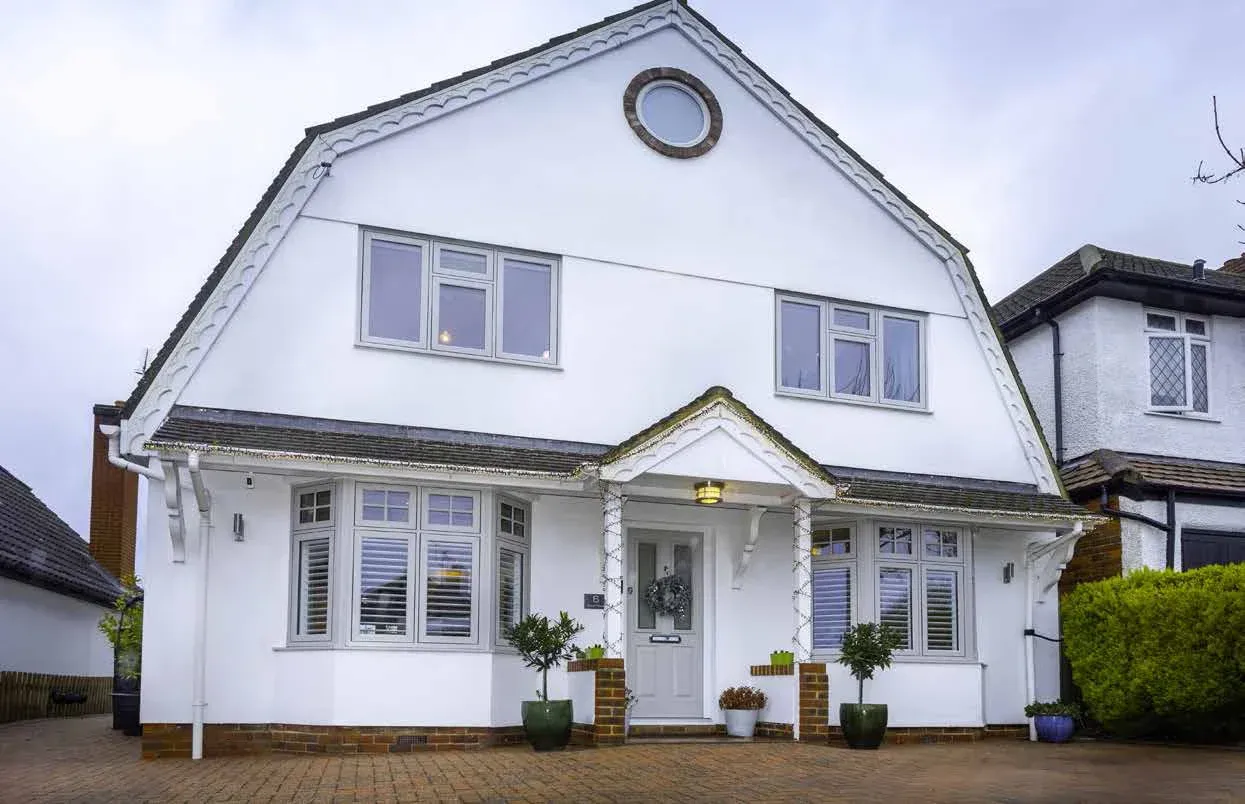
Shaped windows
Shaped windows: styles, prices and options
Arches, circles, triangles and more. Shaped windows add character, bring light into awkward spaces and match period features.
View styles and designs Get a free quote
Last updated: · By the Orangeries & Conservatories team
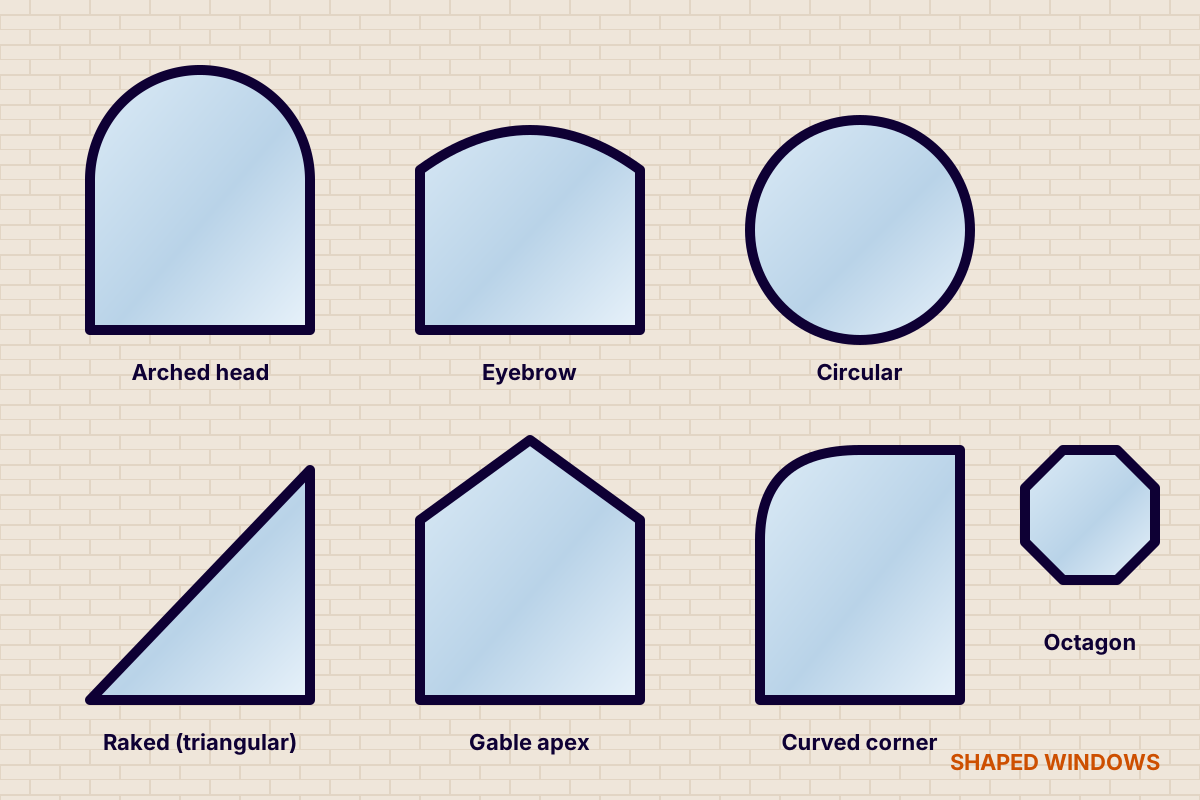
Shaped windows are any windows that are not a standard rectangle: arched, eyebrow, gothic, circular, raked (triangular or trapezoid), gable apex and octagonal designs. Most are fixed, made to measure in uPVC, timber or aluminium, and fitted with double or triple glazing. They are priced individually.
What are shaped windows?
Most UK windows are rectangles, but many homes have openings that are not: arched heads on Victorian bays, fanlights over front doors, round windows in hallways and triangular windows in gable ends. Shaped windows fill these spaces with properly sealed, energy-efficient glazing.
They are always made to measure. A surveyor templates the opening so the new frame follows the curve or angle exactly, and the glass units are cut to match.
Key features
- Arched and eyebrow heads for period homes and fanlights.
- Gothic arches for churches, chapels and very old houses.
- Circular and octagonal feature windows.
- Raked and gable apex windows for vaulted ceilings and gable ends.
- Decorative glass, Georgian bars and colours to match other windows.
Is it right for you?
Best suited to
- Period homes with arched or curved openings
- Gable ends and vaulted ceilings
- Hallways, landings and bathrooms
- Barn conversions and self-builds
Things to consider
- Most shaped windows are fixed and do not open
- Made to measure, so lead times are longer
- Priced individually; complex shapes cost more
- Plan ventilation elsewhere in the room
Fixed or opening?
Because hinges and locks are hard to fit on curves and angles, most shaped windows are fixed. That allows almost any shape and keeps frames slim. Where you need ventilation, a shaped window can be combined with a standard opening casement below, or with a trickle vent.
Shaped glass can be clear, obscure, leaded, etched or stained. See glass options.
Replacing arched and curved-head windows
Arched heads are common on Victorian and Edwardian houses, over front doors and in bay windows. When these are replaced with square-topped windows and a panel filling the arch, the house loses much of its character, and buyers notice.
- Segmental arches are shallow curves, usually under a brick arch; semicircular arches are a full half-circle.
- The new frame follows the curve, and sashes or casements can sit below an arched fixed top light, so the window still opens.
- Arched sliding sash windows are possible, with the curve on the top sash.
- Glazing bars can follow the curve or radiate from the centre, as in a Georgian fanlight.
Gable apex and raked windows
A gable apex window follows the pitch of the roof in a gable end, often above French or bi-fold doors in an extension, a barn conversion or a loft. Raked windows are trapezoid shapes that follow a sloping ceiling.
- Light: they bring daylight high into vaulted rooms and make them feel much larger.
- Heat and glare: a large south or west-facing apex can overheat in summer, so consider solar control glass.
- Safety glass: glass that is low down, next to doors or forms part of a large glazed screen usually needs to be toughened or laminated.
- Blinds: made-to-measure shaped blinds and pleated blinds for angled tops are available, but are best planned before fitting.
- Structure: a large apex frame may need a structural post or transom; your installer will check this at the survey.
What affects the price of a shaped window
Shaped windows are priced one by one after a survey, and usually cost noticeably more than a rectangular window of the same size. The main factors are:
- The shape: a simple segmental arch costs less than a full circle, a gothic arch or a multi-angled apex.
- Size and glass: larger panes, triple glazing, solar control, leaded or stained glass all add cost.
- Fixed or opening: fixed shapes are simplest; opening sections below or within the shape add hardware and frame work.
- Material and colour: curved uPVC and aluminium are made on specialist bending machines, and timber arches are hand-made, so colours and woodgrains can affect lead times and price.
- Access: high gable windows may need scaffolding.
Including shaped windows in a whole-house quote is usually better value than ordering them separately later.
Surveying, lead times and fitting
Every shaped window is made to measure. The surveyor measures the opening carefully, and for curves and irregular angles makes a template on site, so the frame matches the brickwork exactly. Lead times are usually a few weeks longer than for standard windows. Fitting is often done on the same day as the rest of the windows, and the frame is sealed and finished to suit the curve of the opening.
Shapes compared
Shaped windows are priced individually after a survey. This table shows where each shape is most often used.
| Shape | Usually opens? | Best for |
|---|---|---|
| Arched head | Sometimes | Victorian and Edwardian homes, bays |
| Eyebrow | No | Fanlights over front doors |
| Gothic arch | No | Very old homes, chapels, conversions |
| Circular | Rarely | Hallways, bathrooms, feature walls |
| Raked or gable apex | No | Gable ends, vaulted rooms, barn conversions |
| Octagonal | No | Feature windows, stair landings |
Ask for shaped windows to be included in your window survey and quote. Prices are current indicative UK ranges from the published guides listed below. Always get a written quote.
Rules and regulations
- England and Wales: replacement windows must meet building regulations for energy, safety glass, ventilation and fire escape. In England that means a U-value of 1.4 W/m²K or a Window Energy Rating of band B or better. A FENSA or Certass installer can self-certify the work and give you a certificate.
- Scotland: replacing windows in a house of one or two storeys does not normally need a building warrant, but the windows must still meet the building standards. Flats and taller buildings may need one.
- Northern Ireland: replacement windows are controlled under the Building Regulations (Northern Ireland). Check with your council's building control service.
- Listed buildings and conservation areas: changing window style or material may need consent. Ask your council before ordering.
See the full guide to the rules for new windows and doors across the UK.
Shaped windows: styles and designs
Arched, gothic, circular and gable apex windows on period homes, barn-style extensions and vaulted rooms, with ideas for shutters and blinds. Tap any photo to see it larger.
Seen a style you like?
Tell us which designs caught your eye and we will help you choose the right style, frame, colour and glass for your home. Our survey and quote are free, with no obligation.
Related guides
Common questions
Can shaped windows open?
Most are fixed, because hinges and locks are difficult to fit on curves and angles. Some arched windows can open.
What is an eyebrow window?
An eyebrow window has a gently curved top, like a raised eyebrow, and is often used as a fanlight above a front door.
How are shaped windows measured?
A surveyor templates the opening so the new frame and glass follow the shape exactly.
Can shaped windows be double glazed?
Yes. Shaped windows are made with sealed double or triple-glazed units cut to the shape of the frame.
How much do shaped windows cost?
They are priced individually after a survey and usually cost noticeably more than a rectangular window of the same size. The shape, size, glass, material and whether any part opens all affect the price.
Can I have an arched sash window?
Yes. Sliding sash windows can be made with a segmental or semicircular arched top sash, in timber or uPVC, to match original Victorian and Georgian windows.
Do gable apex windows need safety glass?
Often, yes. Glass close to the floor, next to doors or in large glazed screens usually needs to be toughened or laminated under building regulations.
Can I get blinds for shaped windows?
Yes. Made-to-measure blinds are available for arches, angled tops and apex windows, though fixed shapes high up are often left uncovered or fitted with solar control glass instead.
How long do shaped windows take to make?
Usually a few weeks longer than standard windows, because each one is templated and made to order. Your installer will give you a date at the survey.
If we have not answered your question here, please feel free to view our full FAQs or contact us directly.
Ready to plan your new room?
Get a ballpark price in under a minute with our estimator, or send us your project details for a free quote.