
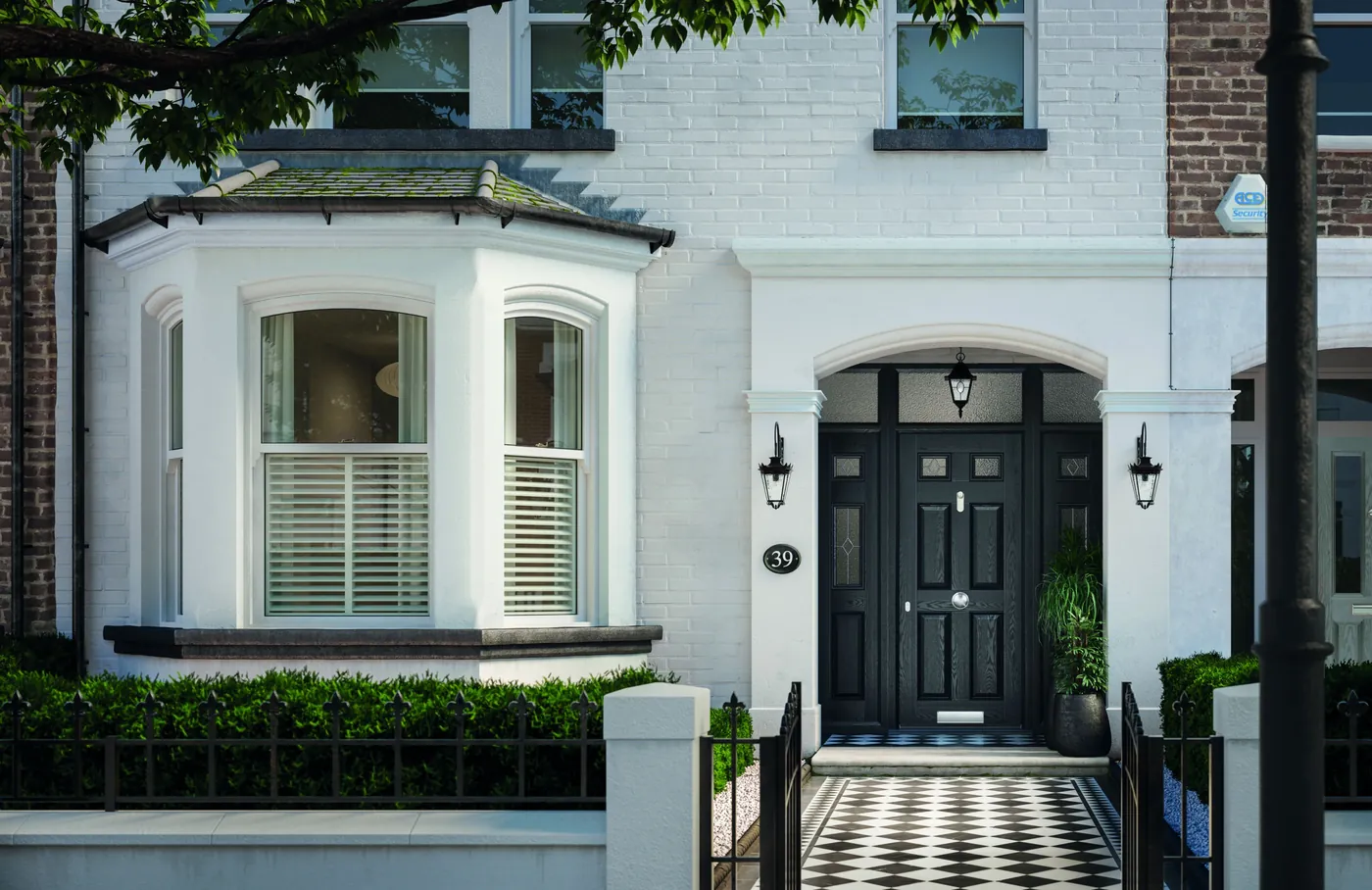
French doors
French doors: styles, prices and options
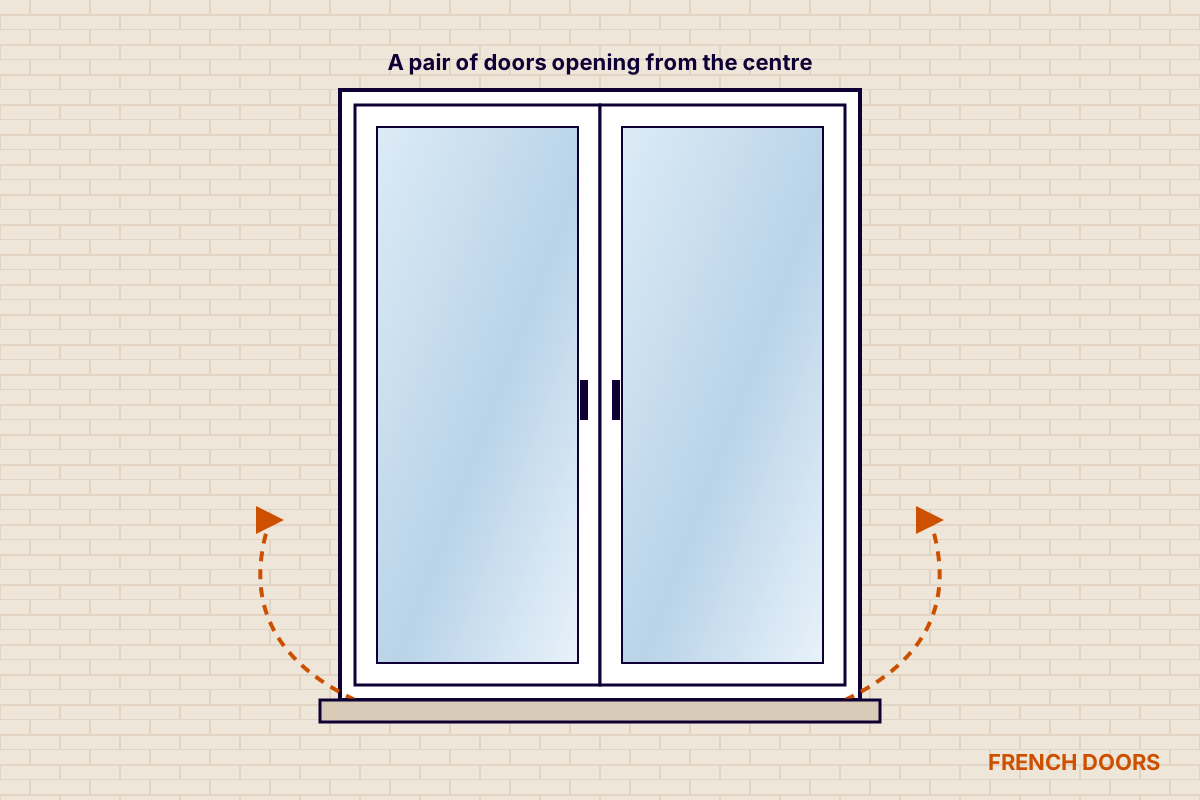
A pair of glazed doors that open from the centre, giving a classic, elegant link between your home and garden.
Last updated: · By the Orangeries & Conservatories team
French doors are a pair of hinged, glazed doors that open from the centre, usually outwards, with no central post. They give a classic look and a wide opening to the garden, suit conservatories and orangeries, and typically cost about £1,000 to £2,500 installed, with uPVC from around £700.
What are French doors?
French doors are two doors hung in one frame that meet in the middle. When both are open there is no central post, so you get a wide, clear opening. Most open outwards, which saves space inside, but inward-opening versions are available.
They are a natural choice for conservatories, orangeries and traditional homes. Adding fixed side panels widens the glazed area without making the doors themselves too heavy.
Key features
- A pair of doors that open from the centre.
- No central post when both doors are open.
- Optional fixed side panels and top lights.
- Multi-point locking on the main door and shoot bolts on the second.
- Glazing bars, decorative glass and integral blinds available.
Is it right for you?
Best suited to
- Conservatories and orangeries
- Traditional and period homes
- Openings up to about 1.8 m wide
- Rooms where a classic look matters more than the widest opening
Things to consider
- Outward-opening doors need clear space outside
- Doors can catch in the wind if not held open
- Wider openings may suit sliding or bi-fold doors better
- Opening up a wall needs a new lintel and approval
French, patio or bi-fold?
French doors give a classic look and a modest opening. Sliding patio doors have larger panes and slimmer frames and never swing into the room or garden. Bi-fold doors open almost the whole width, but show more frame when closed.
As a rule of thumb, French doors suit openings up to about 1.8 m, patio doors suit 2 to 4 m, and bi-folds suit wide openings where you want the room fully open in summer.
Types of French doors
uPVC French doors are the most affordable and need almost no maintenance. They come in white, grey, black and woodgrain finishes, and suit most modern and suburban homes.
Aluminium French doors have slimmer frames, so you see more glass. They come in any colour, often grey or black outside and white inside, and suit contemporary homes and extensions.
Timber French doors are the traditional choice for period and listed homes. Engineered hardwood or softwood is painted or stained, and needs repainting every few years.
Composite and steel-look French doors are also available. Composite doors often have a solid lower panel for privacy and security, while slim black steel-look doors with glazing bars give an industrial, heritage look.
French windows and Juliet balconies: on upper floors, a pair of full-height opening doors with a glass or metal balustrade in front gives the light and air of French doors where there is no balcony to step onto.
French door sizes
Every set is made to measure, but most French doors fall within these ranges. Each door leaf is usually between about 500 mm and 900 mm wide, which limits how wide a pair can be without side panels.
| Configuration | Typical overall width | Typical height |
|---|---|---|
| Pair of doors only | 1.2 m – 1.8 m | 2.0 m – 2.1 m |
| Pair with one side panel | 1.8 m – 2.4 m | 2.0 m – 2.1 m |
| Pair with two side panels | 2.4 m – 3.0 m | 2.0 m – 2.1 m |
For openings wider than about 3 m, sliding patio doors or bi-fold doors usually work better.
Security, glass and energy efficiency
- Locks: a multi-point lock on the main door and shoot bolts top and bottom on the second door. Choose an anti-snap, anti-bump cylinder.
- Tested security: look for doors tested to PAS 24, the UK enhanced security standard, or Secured by Design accreditation.
- Safety glass: toughened or laminated glass is required in doors. Laminated glass stays in place if broken and adds security.
- Energy: in England, replacement doors that are more than half glazed should reach a U-value of about 1.4 W/m²K. Double glazing with a warm edge spacer and argon gas easily meets this, and triple glazing does better.
- Thresholds: a low or level threshold makes it easier to step out and suits wheelchairs and buggies, but needs good drainage outside.
- Extras: restrictor stays to hold the doors open in the wind, integral blinds between the glass, and decorative glazing bars.
Fitting French doors
Replacing existing doors: swapping old French or patio doors for new ones in the same opening usually takes less than a day and is self-certified by a FENSA or Certass installer.
Making a new opening: turning a window into French doors means cutting the wall below the window, fitting a suitable lintel and making good inside and out. That is structural work which needs building regulations approval, and it usually takes a few days.
In a conservation area or on a listed building, changing a window to doors may also need planning permission or listed building consent. See our planning guide.
French door prices
French doors are priced on size, frame material and whether side panels are included.
| Frame | Typical price, installed | Notes |
|---|---|---|
| uPVC | £700 – £1,200 | Most affordable |
| Aluminium | £1,300 – £2,500 | Slim frames, any colour |
| Timber | £1,350 – £2,800 | Traditional and period homes |
Side panels and structural work to widen an opening are extra. Prices are current indicative UK ranges from the published guides listed below. Always get a written quote.
Rules and regulations
- Energy and safety: replacement external doors must meet building rules for heat loss, and glazed areas in and beside doors must use toughened or laminated safety glass.
- Certification: in England and Wales a FENSA or Certass registered installer can self-certify the work. In Scotland and Northern Ireland, check with your council's building standards or building control team.
- Security: look for doors tested to PAS 24 or approved under Secured by Design, with multi-point locks and anti-snap cylinders.
- Widening an opening: making an opening bigger for patio or bi-fold doors needs a new lintel or steel beam, and building regulations approval or a building warrant.
See the full guide to the rules for new windows and doors across the UK.
Found the right style?
Tell us what you are looking for and we will recommend the right design, frame and glass for your home. Our survey and quote are free, with no obligation.
Common questions
How much do French doors cost?
French doors typically cost about £1,000 to £2,500 installed. uPVC French doors start at around £700, with aluminium and timber higher.
Do French doors open in or out?
Most UK French doors open outwards to save space inside, but inward-opening versions are available.
Are French doors secure?
Modern French doors use multi-point locking on the main door and shoot bolts on the second door. Look for PAS 24 certification.
Should French doors open inwards or outwards?
Outward-opening doors save space inside and the weather seals press tighter when the wind blows against them, which is why they are the UK norm. Inward-opening doors are useful where there is a narrow balcony, a step or a path right outside.
Can I turn a window into French doors?
Usually, yes. The wall below the window is removed and a suitable lintel fitted if the opening gets wider. This is structural work that needs building regulations approval, and in a conservation area or listed building it may need permission or consent.
What size are French doors?
Most pairs are 1.2 m to 1.8 m wide and about 2.1 m high. With side panels, a set can be up to about 3 m wide. Every set should be made to measure for your opening.
Are French doors energy efficient?
Modern double-glazed French doors are very efficient. In England, replacement doors that are mostly glazed should reach a U-value of about 1.4 W/m²K, and triple glazing can do better.
Can French doors have blinds?
Yes. Integral blinds sealed between the panes stay clean and never tangle, or you can fit perfect-fit blinds to each door. Both work well where curtains would get in the way of the doors opening.
Are French doors or patio doors better?
French doors give a classic look and a clear opening with no centre post. Sliding patio doors suit wider openings and do not swing into the room or garden.
If we have not answered your question here, please feel free to view our full FAQs or contact us directly.
Ready to plan your new room?
Get a ballpark price in under a minute with our estimator, or send us your project details for a free quote.